
Having the right setup is critical
Having the Right Setup
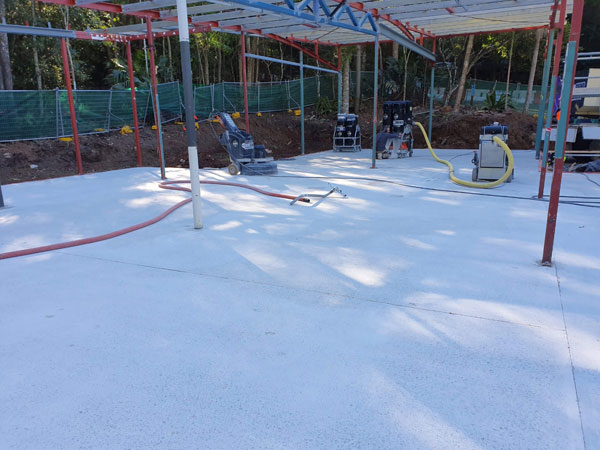
Having the right equipment on site isn't just about owning the biggest grinder. It's about creating a setup that allows the project to be completed efficiently, safely and to the highest possible standard.
Firstly, having the right machinery allows the job to be completed within a reasonable timeframe. No one wants a flooring project to drag on longer than necessary, especially when concrete grinding and polishing can disrupt other trades or daily operations. By using the correct grinder, vacuum and diamond tooling for each project, we can work efficiently without compromising on quality. Secondly, site setup is critical for safety. Effective dust management protects not only our team but also builders, other trades, clients and members of the public from unnecessary exposure to silica-containing dust. A clean worksite also allows everyone to work around each other more efficiently, reducing hazards and helping projects stay on schedule. Finally, even the best equipment is only as good as the team operating it. A well-planned site setup allows every member of the crew to work efficiently, even in challenging environments. The project shown below (in video) was completed between 10:00 pm and 5:00 am, in freezing conditions, while other work continued around us. Having the right people, the right equipment and a clear plan meant the project was completed safely, efficiently and to the high standard our clients expect.
One of the advantages of the Diagrind fleet is that many of our trucks are fitted with three-phase generators, allowing us to generate our own power wherever it's needed. This gives us the flexibility to work on sites where permanent three-phase power isn't available, helping avoid delays and allowing projects to continue without relying on temporary power connections.
At Diagrind, we operate a wide range of concrete grinders and industrial dust extraction systems, allowing us to select the most suitable equipment for every project. Large commercial and industrial floors often require our biggest planetary grinders to maximise productivity, while residential homes, staircases and confined spaces may require smaller, more manoeuvrable machines. Matching the equipment to the project not only improves efficiency but also produces a better-quality finish.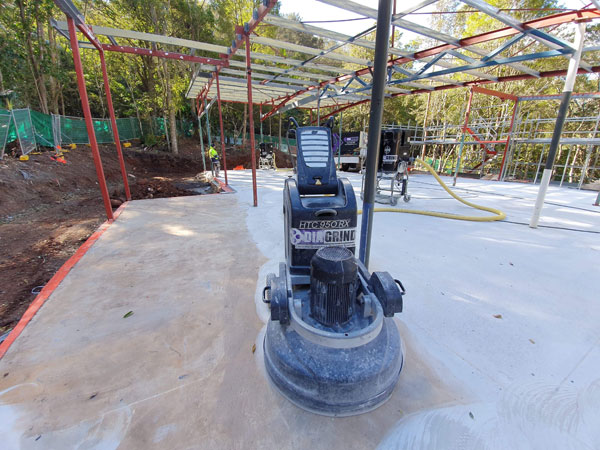
One thing remains consistent across every site—effective dust management. Whether we're grinding a residential garage or a large warehouse floor, controlling dust is a fundamental part of how we work.
Dust management isn't simply about keeping a site looking clean; it's an essential part of workplace health and safety. Depending on the project, we control dust using either high-performance industrial vacuum systems connected directly to our grinders or by using wet grinding techniques where appropriate.
Wet grinding is often required during certain stages of the grinding and polishing process or when working with specific concrete types. While water prevents dust from becoming airborne, it creates slurry that must be carefully collected and disposed of correctly. Vacuum grinding captures the majority of dust at the source, while wet grinding keeps dust suppressed by preventing it from entering the air.
No grinding process is ever completely dust-free, but the goal is always the same—to minimise dust as much as reasonably practicable while maintaining a safe, clean and efficient work environment. Having the right equipment, the right procedures and the right team allows Diagrind to consistently deliver high-quality concrete flooring projects while protecting everyone on site.
Site Setup Example 1:


Concrete Cracking
Now there are three garantees in life death taxes and concrete cracking. Plenty can be done to minimise cracking and to try to prevent it but at the end of the day there is more than likely a crack there (whether is is visible or not). So what does cracked concrete mean for polished concrete?

Concrete Cutting and Drilling
Can you just use any saw or drill to cut concrete?


The short answer no, the long answer.......
Burnished Concrete
How do you get a burnished concrete finish?
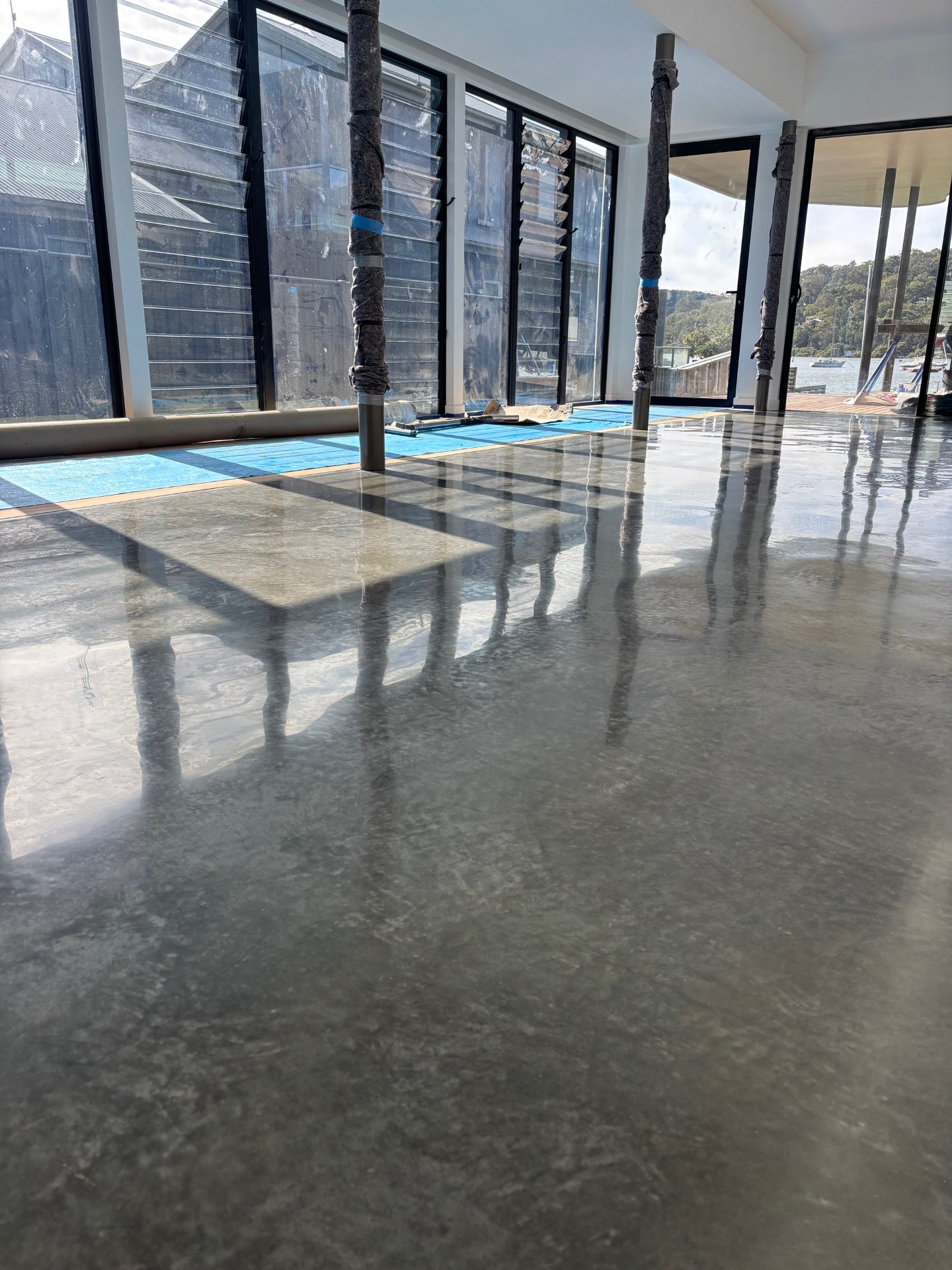
Burnished concrete is a polished concrete finish where no aggregate is exposed, achieved by polishing the cement cream layer at the surface of the slab. Because the process does not involve grinding or removing material, the final appearance is determined at the time of concrete placement and finishing. The slab must be placed and finished as flat and level as possible, as any surface highs, lows, or undulation will remain visible in the finished floor. If the floor is not laid flat, light will reflect unevenly across the surface, creating a rippled or wave-like appearance, think of the surface of the ocean.
When using a power trowel (helicopter), the concreter must burnish the surface until it darkens or “goes black.” This is an industry term referring to the densification and closing of the cement cream at the surface, and it marks the beginning of the polishing process. An experienced concreter will understand this requirement for a burnished finish.
We typically return around two weeks after placement to continue polishing, allowing the concrete sufficient time to cure. While higher-strength concrete mixes can reduce curing time, we recommend a minimum of 32 MPa to achieve a consistent and durable burnished finish.
Why early protection of the slab is critical
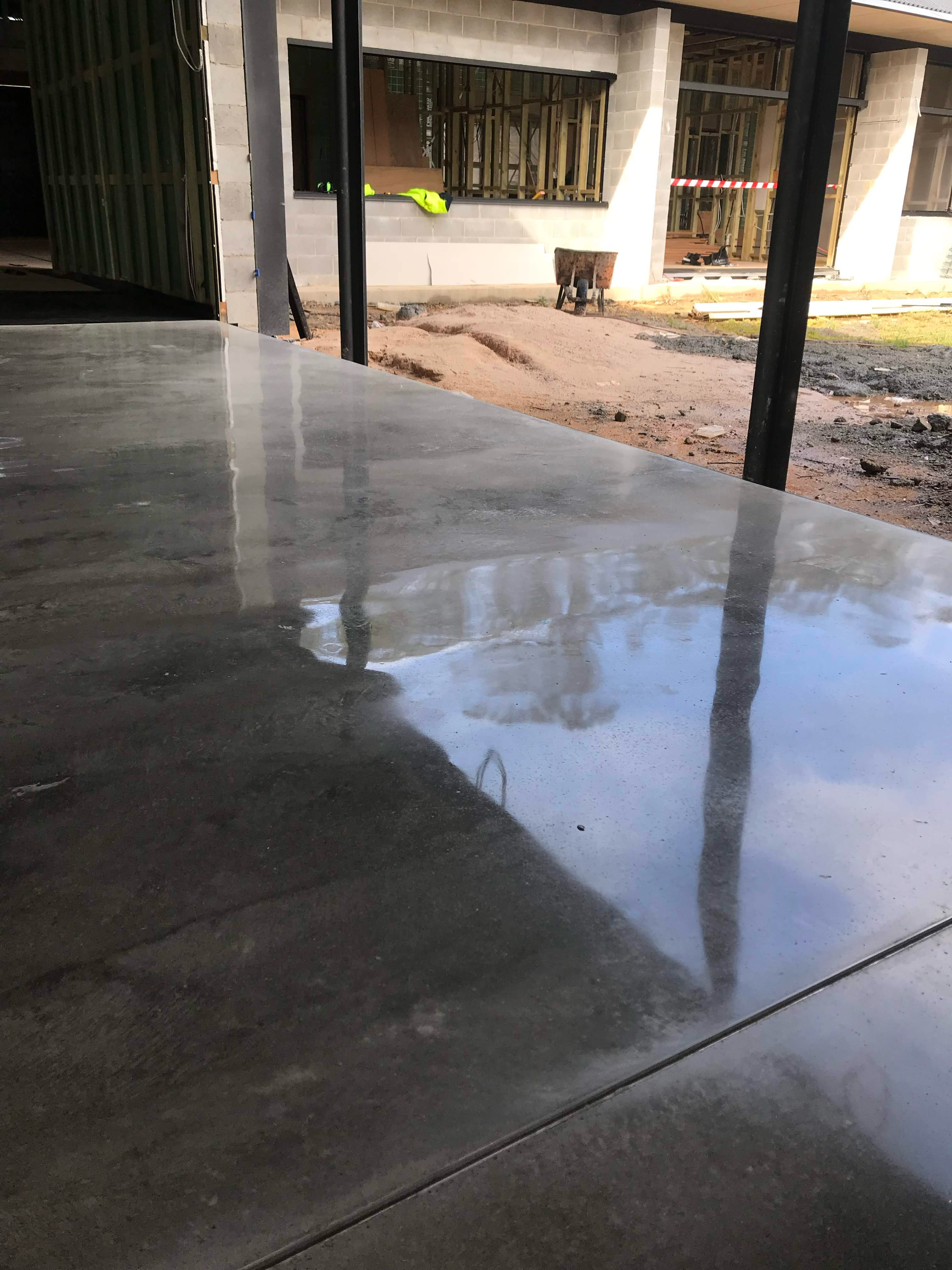 It is essential that the concrete is protected before polishing. If the slab is exposed to construction traffic, moisture, rust, or timber tannins, staining and marking can occur that cannot be removed without grinding the surface. Heavier grinding would expose aggregate and change the finish, making a true burnished result unachievable.
By having Diagrind complete the polishing early, a higher-quality finish can be achieved. Polishing before walls are installed also improves access and significantly reduces the risk of contamination. Because no material is removed from the surface during burnishing, any stains present at this stage will remain visible.
Once polished, the floor is sealed and becomes reasonably resistant to minor damage. However, ongoing protection during the remainder of the build is still essential.
How to protect burnished concrete during construction
The most effective protection starts with a clean job site. Prior to walls and roofing being installed, regularly sweep or blow debris and contaminants off the slab. Avoid leaving nails or screws on the surface where they can become wet and rust, and do not store timber directly on the concrete, as moisture can cause tannin staining.
Once walls and the roof are in place, the floor should be covered. We most commonly use RAM Board or similar floor protection systems, although the final method is typically determined by the builder.
Can damage be repaired?
If the floor is damaged during construction, many issues can be repaired depending on the type and severity of the damage. Early assessment is important to prevent permanent defects.
If you have any questions about achieving or protecting a burnished concrete finish, contact the team at Diagrind® today.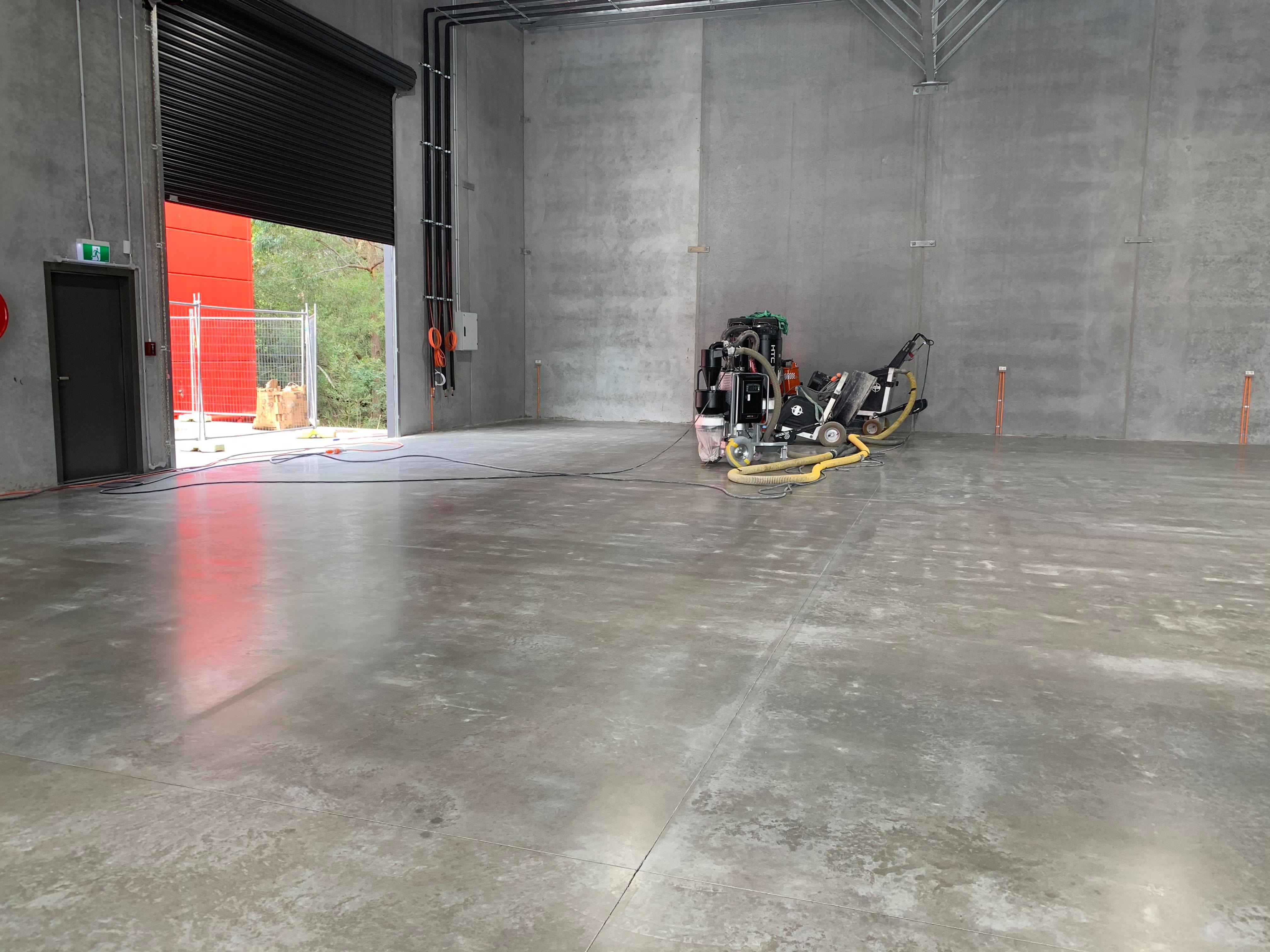
Burnished Concrete – Frequently Asked Questions
Can you fix ripples in burnished concrete?
No. Ripples, waves, or surface undulation in burnished concrete cannot be corrected once the slab has cured. Because a burnished finish does not involve grinding the surface, any highs and lows present at placement will remain visible in the finished floor. Correct slab flatness must be achieved during the concrete pour and finishing stage. If we grind the concrete flat to remove the ripples this will expose aggregate and fines making it no longer a burnished finish.
Can stains be removed from burnished concrete?
Yes and No. This is a very loaded question. In many cases, no. Stains caused by rust, tannins, oils, or construction contaminants usually cannot be removed from burnished concrete without grinding the surface, which would expose aggregate and change the finish. This is why early protection of the slab is critical. But marks left by dirt or wheels like forklifts can be removed without causing over exposure of fines and aggregate can occur.
Is burnished concrete cheaper than exposed aggregate finishes?
Burnished concrete can be more cost-effective than exposed aggregate finishes because it requires minimal grinding. However, it demands a higher standard of concrete placement, finishing, and site protection. Poor slab quality or contamination can increase costs or make the finish unachievable.So you may pay less for the finishing of the surface but may need to pay more for a higher quality placement of the concrete.
When should polishing be done on a burnished slab?
Polishing should be carried out once the concrete has cured—typically around two weeks after placement, depending on concrete strength and conditions. Early coordination ensures the slab is polished before it becomes contaminated or damaged by other construction trades. Some projects have a topping slab installed during the build and this can be polsihed later in the bulding process.
Projects and Awards







.jpg)

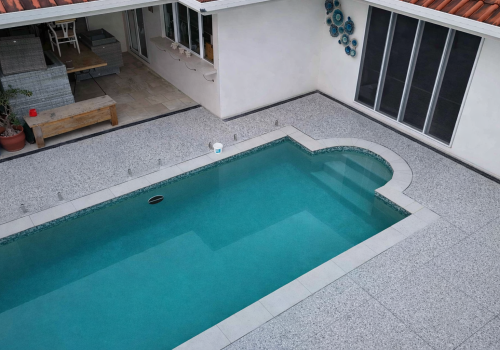

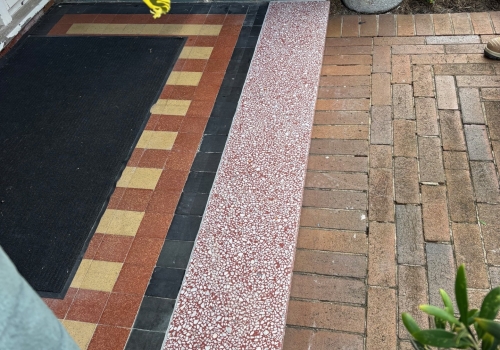

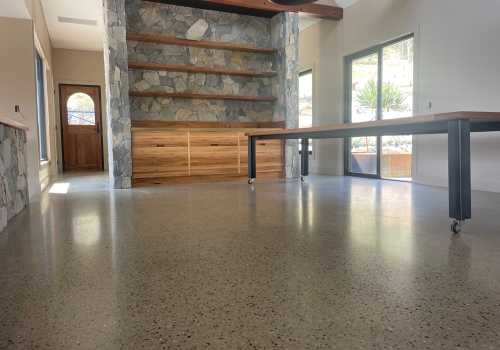

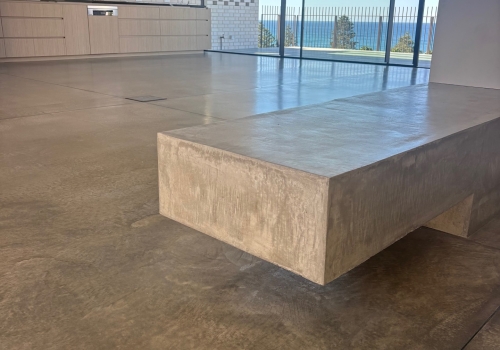
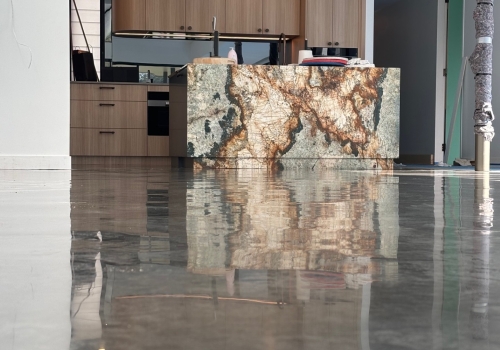
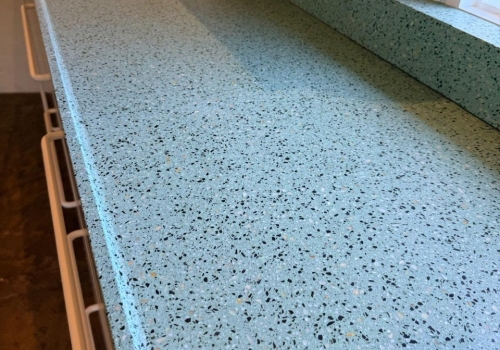
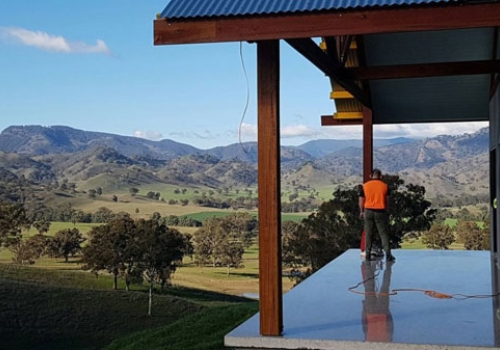
An example of some of the awards and featured articles Diagrind ® has been apart of. Diagrind ® has worked with a large range of small to medium to large builders both commercial retail and residential.
Some of our partners include but are not limited to ; Lend Lease, Mudgecorp, North Constructions, B & K Developments NSW, Evoke, Maddem Constructions, Davy Constructions, Sydney International Airport, Corporate Construction Group, Intermain, Sydney Tafe, LA Group, Coastal Constructions, Greg Mitchel Building, Five Three Designs, Peloton, Parchem, AMS Group, Worthington, Prestige, Converse, Kennards Storage, Storage King, Shiploads to name just a few.
Our projects have ranged from simple tile removal and floor preparation through to the high end finishes seen in architectural homes like those featured in our award winning homes below. When working on some of our award winning architectural homes we are involved from the very begining before the concrete is ever poured. This allows for the best outcome and to minimise artefacts. .
Our Commercial and retail projects often we are working with concrete that is pre-existing. Diagrind ® however will work with what is there to bring out the best possible outcome for our clients. One very important factor in retail and commercial is time. Diagrind ® uses the best equipment on the market to ensure every project is completed in time and on budget.
Awards
 |
|
|
|
| Serpentine 2018 | project winners 2017 | Serpentine 2018 | Moonan Flats 2017 |
 |
|
 |
 |
| Featured Article | Choice Cuts |
2015 House of the Year Featuring Diagirnd Polished concrete |
Lyons House |