
Why is Concrete Placement So Important?
 One of the most common misconceptions we hear is:
"Can't you just grind it out later?"
The simple answer is no.
While polished concrete can remove imperfections from the surface of a slab, it cannot correct every mistake made during the concrete placement process. In fact, some of the most common placement errors become permanent features of the finished polished concrete floor. The photograph above shows marks left behind where the screed was allowed to rest on the surface of the concrete. At first glance, this may not seem like a problem. After all, the slab will be power trowelled (helicopter finished), so surely everything will disappear?
Unfortunately, that's not how concrete works.
When the screed is dragged or allowed to rest on the surface, it can disturb the natural distribution of the aggregates within the slab. Although the surface may appear smooth after finishing, these disturbances remain beneath the cream layer of the concrete. Once the floor is ground and polished, they become visible as permanent variations in the aggregate pattern and cannot be removed without grinding far deeper into the slab—something that is often impossible or undesirable.
Boot marks create a similar problem. As concreters work backwards across the slab, their boots leave depressions in the fresh concrete. These should always be filled with fresh concrete before finishing. Simply pulling slurry back over the footprint does not replace the displaced aggregate, resulting in areas that polish differently and remain visible for the life of the floor.
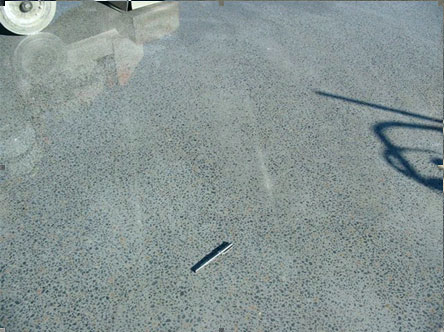 These types of placement defects cannot simply be "ground out." Once the concrete has cured, the aggregate distribution has already been altered, and no amount of polishing can restore what was originally lost. Because polished concrete is the finished floor—not a product installed over the top—the quality of the finished result depends heavily on the quality of the concrete placement. Every stage, from the concrete mix and placement through to screeding, power trowelling and curing, contributes to the final appearance.
At Diagrind, we encourage builders, concreters and homeowners to speak with us before the concrete is poured. Different polished concrete finishes require different placement and finishing techniques, and a small amount of planning can make a significant difference to the final result. Whether you're aiming for a burnished finish, salt and pepper exposure or full stone exposure, placing the slab correctly gives us the best possible foundation to achieve the floor you envision.
Polished concrete is a premium architectural finish and deserves the same level of care and attention as natural stone or terrazzo. Investing time in the placement stage helps ensure the floor will look its best for decades to come.
If you're planning a polished concrete floor, contact the Diagrind team before the concrete is poured. We'll work with your builder and concreter to help achieve the best possible result from day one.